
The Multi-Chances Tournament, abbreviated as TMC, holds a special place in the competitive landscape of French tennis. Organized by the FFT, this format guarantees each participant multiple matches during the same event, whereas a traditional knockout draw can send a player home after just one loss. The TMC is based on a simple principle: to provide playing time, regardless of skill level.
TMC tennis: a format that changes the competition logic
In a traditional tournament, losing in the first round often means playing just one match. The TMC reverses this mechanism. Each entrant is guaranteed a minimum of three matches throughout the tournament, thanks to a system of pools or integrated repechages in the draw.
The number of spots per draw is limited (usually between sixteen and twenty-four players), allowing matches to be concentrated over one or two days. A scheduling document from the Bas-Rhin committee details, for example, the sequence of matches in a single day with two courts, proving that the format is designed for tight time management.
This constraint of a reduced capacity has a direct effect: the referee can plan rotations without too much downtime, and players remain engaged on-site. The TMC operates as a compact block, in contrast to tournaments spread over several weeks where scheduling depends on previous results. To delve deeper into the meaning of TMC tennis on Bonjour Sportif, the format is described along with its variations according to categories.
Approval conditions and administrative framework of the TMC
The TMC is not a wild tournament organized freely by a club. Regional leagues impose a precise set of specifications, and approval requests go through the ADOC platform before validation by the departmental committee.
The Hauts-de-France League, for example, sets strict quotas for the 2026 season:
- Two TMCs maximum for second series (one men’s, one women’s)
- Four TMCs for third series (two men’s, two women’s)
- Six TMCs for fourth series (three men’s, three women’s)
These ceilings reflect a desire to reserve the format for intermediate and lower rankings, where the need for matches is greatest. The periods for submitting requests are also regulated, with two distinct windows during the year.
In terms of facilities, the organizing club must have a clubhouse with changing rooms, accessible restrooms for people with reduced mobility, and ideally a dining area. The Auvergne-Rhône-Alpes League recommends at least three courts of the same surface for a TMC of sixteen to twenty-four players. The use of intermediate balls is allowed for beginners, demonstrating that the format adapts to the target audience.
The TMC as a tool for retaining recreational players and adults returning to the sport
Existing content on the TMC mainly describes the rules and organization. Few address the central question: why does this format attract profiles that would never sign up for a traditional tournament?
The specifications of the Hauts-de-France League emphasize a telling point: TMCs must take place “in a friendly atmosphere” and offer “more than just a tennis tournament.” This official wording is not decorative. It reflects the positioning of the TMC as a gateway to competition for audiences distanced from the circuit.
Profiles targeted by the multi-chances format
The events are primarily aimed at senior and senior+ players, but also accept the 15/16 and 17/18 age categories. In practice, three profiles particularly benefit from the format:
- Adults returning to tennis after several years away who fear immediate elimination
- Unranked players or those ranked in the fourth series, for whom every match is an opportunity to accumulate ranking points
- Licensed players seeking a competitive framework without the pressure of a traditional knockout draw
For an unranked player, three guaranteed matches represent three opportunities to score points on the FFT scale. In a traditional tournament, a first-round loss yields nothing or almost nothing. The TMC thus alters the risk-benefit calculation of registration.
Friendliness and retention in clubs
The short format (one day, sometimes two) and the limited number of participants create a group dynamic that larger tournaments do not produce. Players cross paths between matches, share a meal or a drink at the clubhouse, and forge a connection with the organizing club.
This social dimension is not trivial. A club that regularly organizes TMCs has a concrete retention lever: it offers its members and external players a recurring, accessible competitive event tailored to their level. Feedback from the field varies on the extent of this effect, but the principle remains the same: a player who plays three matches is more likely to return than a player eliminated early.

Limits and gray areas of the TMC format
The TMC is not without constraints. The limitation on the number of tournaments per club and per series restricts the available offer in a given area. A second series player in Hauts-de-France has access to only one men’s TMC per club throughout the season.
The reduced capacity also poses an accessibility issue: with sixteen to twenty-four spots per draw, registrations fill up quickly. The available data do not allow for precise measurement of the average fill rate at the national level, but the growing popularity of the format since its launch suggests a tension between supply and demand.
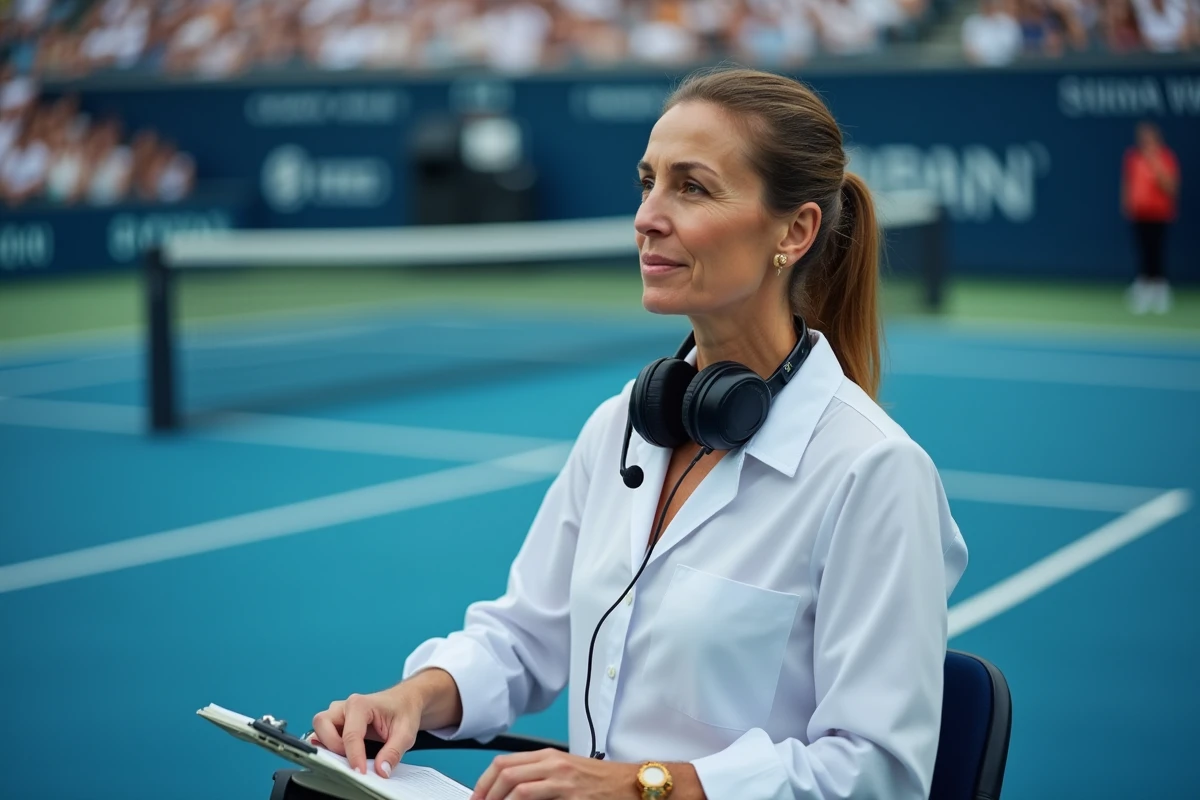
The refereeing, assigned to a JAT1 (first level of qualification), sometimes raises questions about the management of disputes in a less formal setting than a large-scale sanctioned tournament. However, this flexibility helps make organization lighter for small clubs.
The TMC remains a hybrid format, halfway between club activity and official competition. This intermediate position strengthens its appeal to occasional players, but it may also limit its recognition among regular competitors who prefer full draw tournaments to maximize their ranking gains.