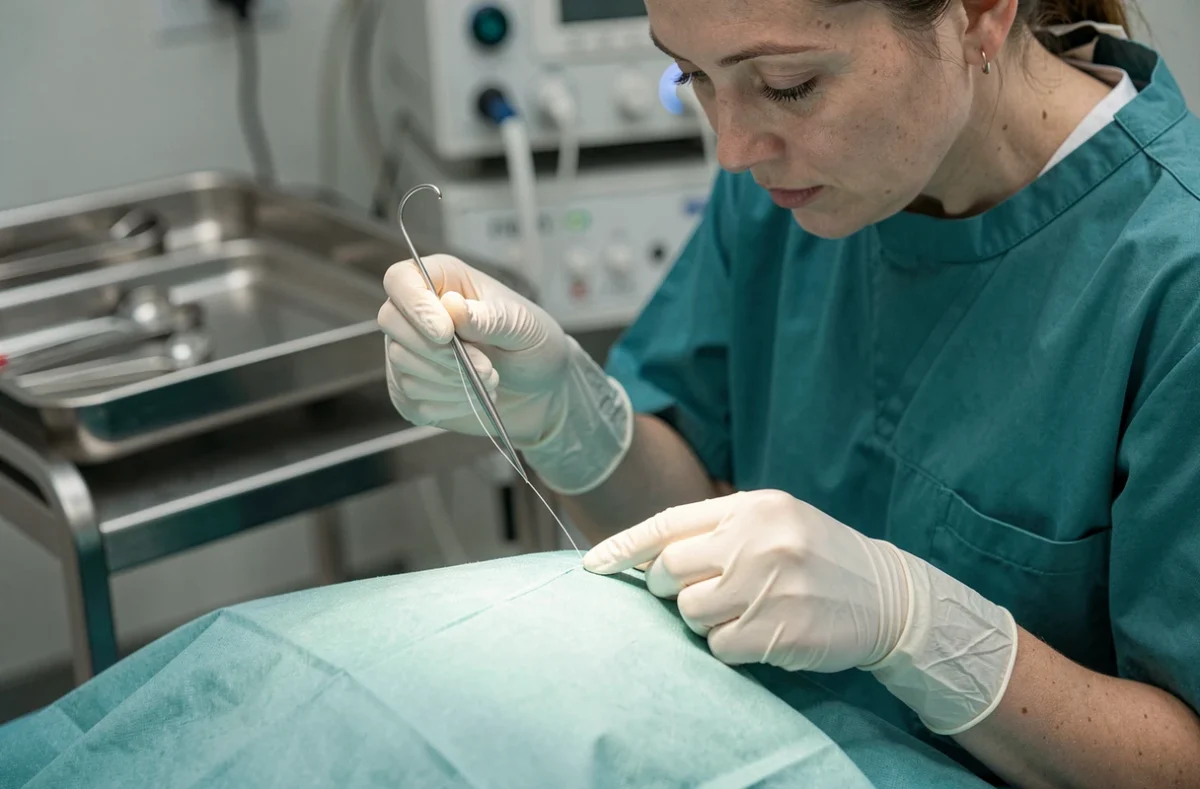
After surgical suturing, a red, slightly swollen area around the thread is almost always visible. This local reaction is part of the normal healing process in tissue closed with absorbable sutures. The thread triggers controlled inflammation, allowing the body to break down the material while rebuilding the tissue. In practice, the challenge is knowing when this inflammation is within the normal range and when it signals a problem.
Suture strength and absorption: two different timelines
It is often assumed that a suture holds the wound closed until it has completely disappeared. In reality, a suture can lose its strength long before it is absorbed. Its mechanical strength gradually decreases as it breaks down, with variations depending on the material used.
Braided and monofilament sutures behave differently in tissue. Braided sutures are flexible and easy for surgeons to handle, but their uneven surface can harbor bacteria. A study of suture segments collected from 158 patients found biofilms at both infected and uninfected sites. A biofilm does not automatically cause an infection, but it can make persistent redness harder to interpret.
Understanding tissue healing after absorbable sutures means keeping in mind the distinction between the period of mechanical support and the time it takes for the suture to be fully absorbed. The suture supports the wound for a limited period, then the body gradually eliminates it, after it has stopped playing a structural role.
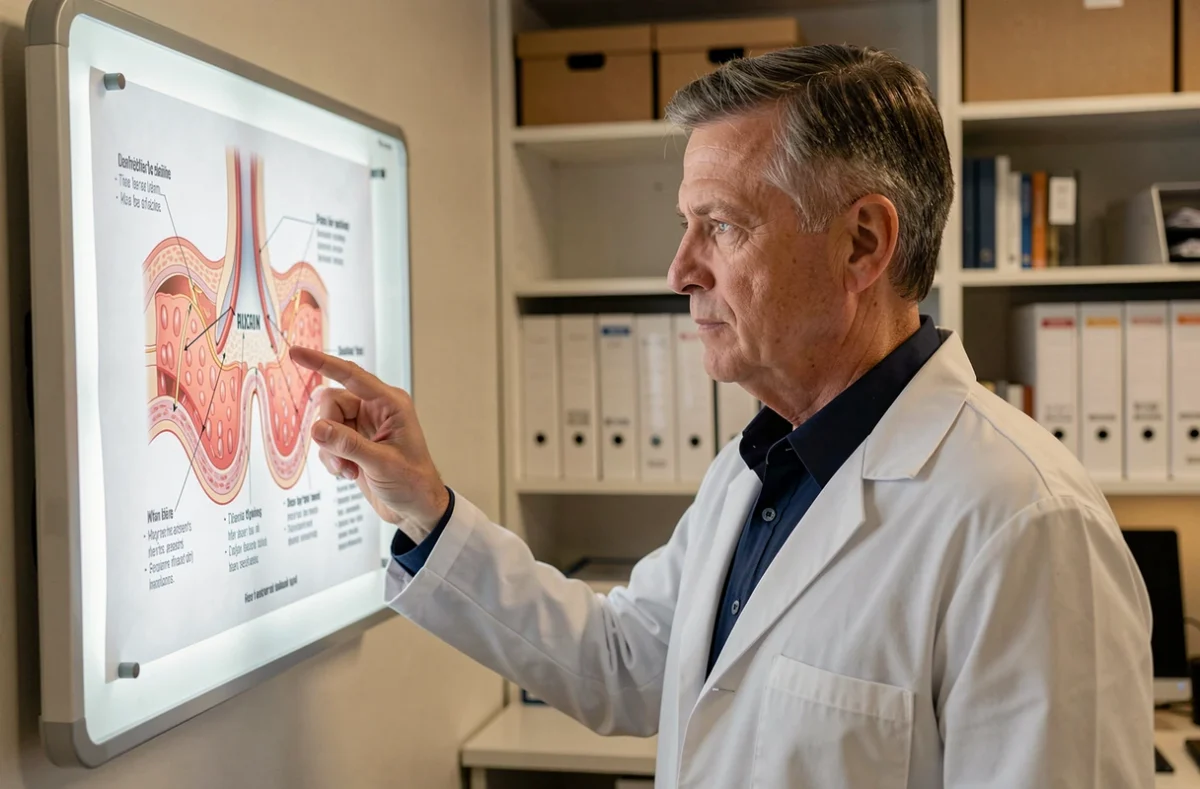
Normal inflammation after suturing: what to expect day by day
In the first few hours after sutures are placed, the tissue reacts to the needle trauma and the presence of the thread. Localized redness and slight swelling are common, sometimes accompanied by a feeling of warmth. This is the acute inflammatory phase, triggered by an influx of immune cells to the site.
The first few days
Moderate redness and swelling are normal during the first 3 to 5 days. The area may be tender to the touch. Clear or slightly pink fluid is also common. The body mobilizes macrophages, which begin breaking down the absorbable suture while clearing away cellular debris.
From the first to the third week
Inflammation gradually subsides. Redness fades and swelling goes down. Collagen begins to form, strengthening the scar. This is the proliferative phase, when fibroblasts take over from inflammatory cells.
If the redness remains stable or gradually fades, with no increase in pain or cloudy discharge, healing is progressing normally. Inflammation that steadily subsides is the best indicator of healthy healing.
Reaction to the material or infection: warning signs to watch for
This question often comes up at follow-up appointments: is the redness normal, or is it cause for concern? In practice, there are three distinct possibilities.
- Physiological inflammation follows a downward trend. Redness, warmth and swelling decrease each day. There is no pus, fever or worsening pain.
- A reaction to the suture material appears as localized redness that persists or returns around the stitch, sometimes with a small lump under the skin. An FDA medical device report described a case of redness, swelling, itching and pain around PDS II sutures used in eyelid surgery, with no signs of infection identified. This remains an individual report, but it illustrates that persistent inflammation does not always mean infection.
- An infection is characterized by pain that worsens instead of improving, thick yellowish or greenish discharge, redness spreading beyond the suture site, fever or chills. These signs require prompt medical evaluation.
It is not always possible to distinguish between these three situations on your own. The severity of the reaction varies depending on the anatomical location, the type of suture used and the patient’s health. A suture in the highly vascularized mouth does not heal in the same way as an abdominal suture under tension.
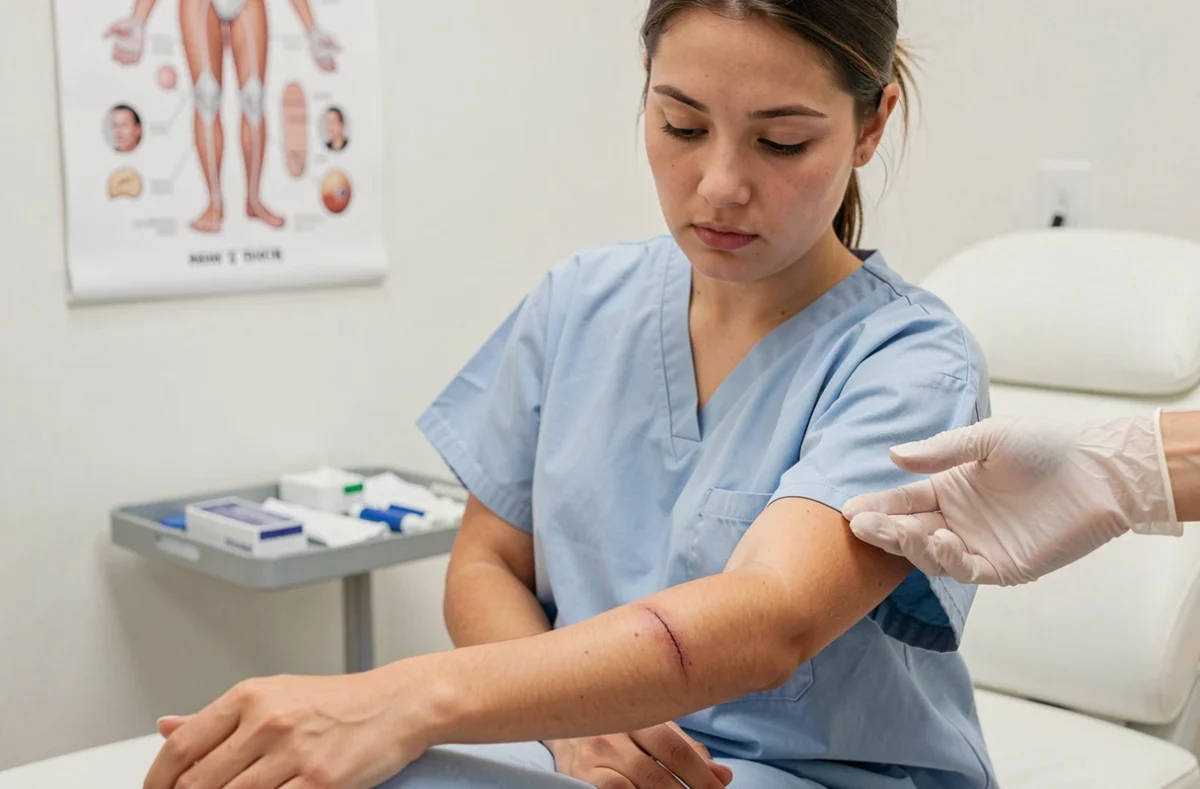
Antibacterial sutures and wound closure: what coatings do (and don’t) change
Antibacterial-coated sutures are available. The idea is appealing: reduce bacterial colonization from the moment the suture is placed to lower the risk of infection. A recent review in periodontal surgery reports that some coatings reduce early colonization without consistently improving clinical outcomes.
The value of these sutures depends on the surgical setting and the individual’s risk. For simple skin closure in a healthy patient, the benefit remains uncertain. For surgery in a contaminated environment or in an immunocompromised patient, the surgeon may consider this precaution worthwhile.
Suture choice has also been studied in abdominal wall surgery in relation to long-term complications. A study following ileostomy closure found an association between braided absorbable sutures and incisional hernia in some analyses, but this association weakened after further statistical adjustments. The independent effect of suture material on long-term complications remains uncertain in this specific context.
When to have a wound closed with absorbable sutures examined
Don’t wait for the situation to worsen before seeking medical advice. Here are some specific situations that warrant an assessment:
- Pain worsens after the third day instead of gradually improving.
- Cloudy, foul-smelling or pus-like discharge appears at the suture site.
- Redness spreads across the skin or reaches areas away from the suture.
- A suture protrudes through the skin (a phenomenon known as “spitting”), accompanied by local inflammation that does not settle within a few days.
- A fever develops in the days after the procedure, even a mild one.
It is not unusual for an absorbable suture to partially protrude from a scar, and this is not in itself an emergency. The body sometimes pushes out a fragment it does not tolerate well. As long as the area stays clean and the inflammation remains localized, keep an eye on it. If a painful lump forms or the surrounding skin becomes warm and tight, have the wound examined.
Healing with absorbable sutures is generally a reliable process. Inflammation is part of the normal process of breaking down the suture and rebuilding tissue. Tracking how symptoms change day by day matters more than judging their intensity at any one moment. Redness that fades is reassuring; redness that spreads is a warning sign.