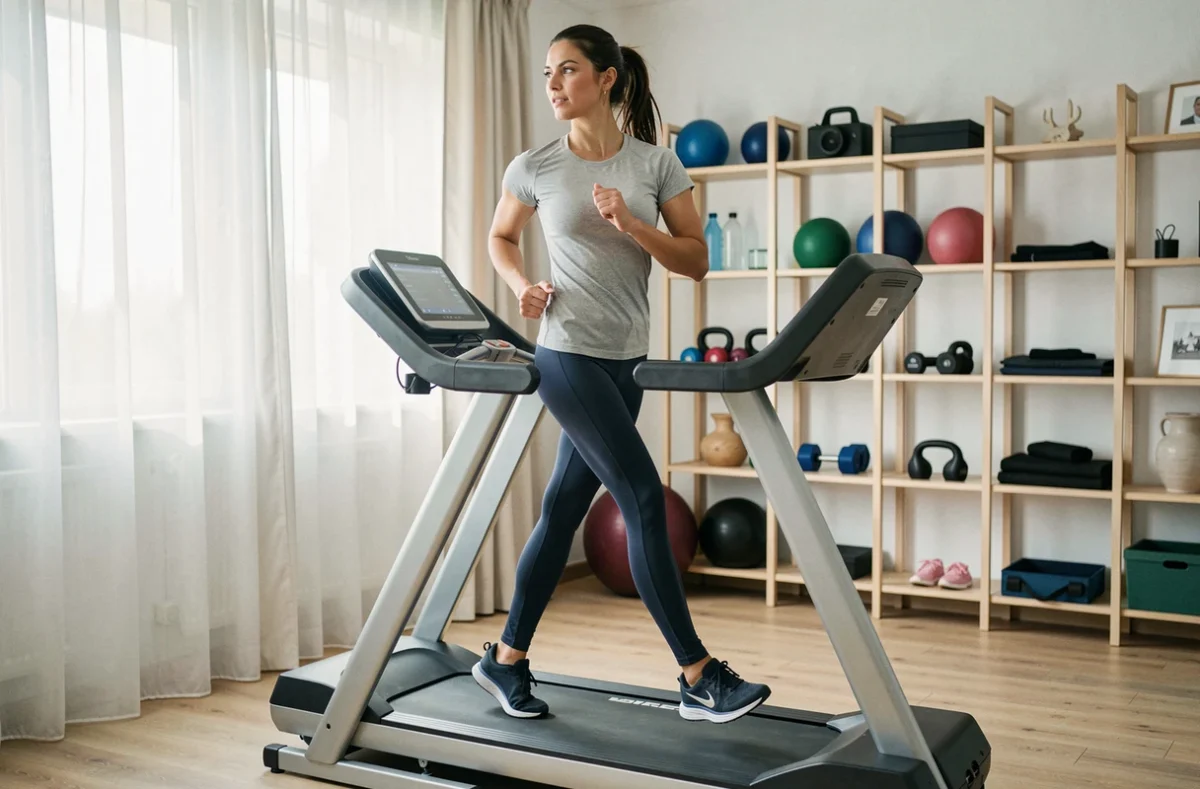
Choosing a treadmill for home use without checking its usage class means ignoring the most structuring data on the technical sheet. The usage category determines the durability of the frame, motor, and belt much more than any marketing argument.
Impact noise in apartments: the criterion that technical sheets ignore
The motor is not the primary source of noise nuisance. The impact noise of footsteps far exceeds the electric hum, especially on a lightweight floor or a floating slab. Vibrations are transmitted to the adjoining walls and the ceiling of the lower floor, making certain time slots unusable.
A thick and dense mat placed under the machine dampens some of the transmissions. Location also matters: keeping the treadmill away from load-bearing walls and shared partitions significantly reduces propagation. We recommend testing the device at running speed (not just walking) before finalizing the purchase, as the noise difference between the two speeds is considerable.
The comparisons available on tapis-course.net allow you to cross-reference feedback from users in apartments, a filter rarely offered by generalist sites.
Usage class and motor sizing
Choosing an undersized class accelerates the wear of the belt and motor, even if the displayed power seems sufficient. The higher the usage category, the more the frame, bearings, and deck are designed to withstand a significant hourly volume.
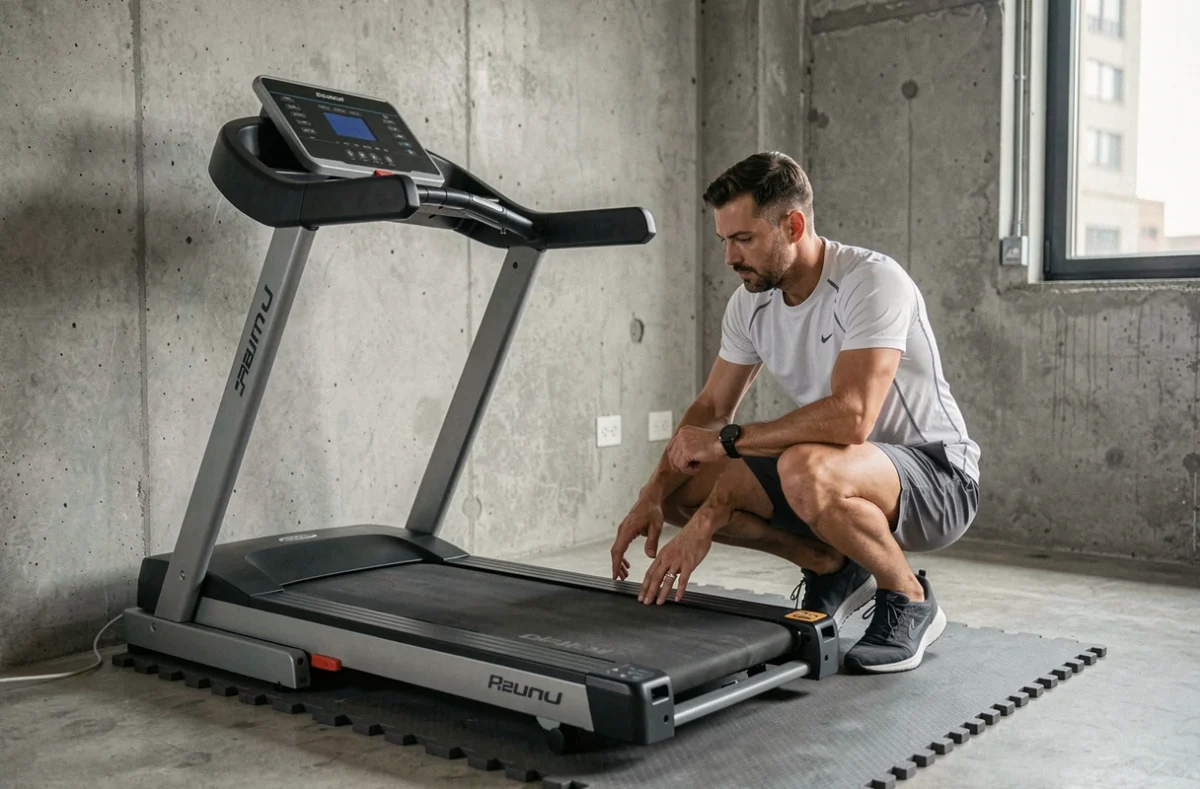
The motor power, which is always highlighted, does not classify treadmills on its own. A powerful motor mounted on a lightweight domestic category frame will wear out faster than a modest motor on a semi-professional frame, because the mechanical structure is not designed to handle the same cumulative load.
We observe that most buyers underestimate their actual usage frequency. Three sessions of forty-five minutes per week are enough to exceed the lightest categories. If two people share the device, you need to move up to the next category to avoid premature wear within a few months.
Running surface: minimum length and width
The belt must exceed the runner’s natural stride. Below 120 cm in length, the risk of stepping on the rear casing increases as soon as the speed exceeds a jogging pace. A width of less than 40 cm forces constant trajectory correction, which alters biomechanics and can generate asymmetrical joint stress.
The maximum user weight indicated on the sheet should be taken with a margin of at least twenty percent above the actual weight. This margin protects the stability of the deck and prolongs the lifespan of the running belt.
Treadmill safety: children, pets, and used devices
Safety is not limited to the emergency stop key. The recall of the Peloton Tread+ by the U.S. Consumer Product Safety Commission in May 2021 highlighted cases of training and entrapment involving children and a pet.
A household with young children or pets should check three points before purchase:
- The presence of an automatic stop system in case of a fall or abnormal pressure under the belt, not just a magnetic key attached to clothing
- The ability to lock the device when not in use (PIN code, key switch, or unplugged with secure storage)
- The free space around the treadmill: sufficient rear clearance prevents a child or pet from being thrown against a wall or furniture
Used treadmills: check the serial number
In the used market, checking the model and serial number in official recall databases is a step that most buyers overlook. The U.S. Consumer Product Safety Commission database lists devices involved in a safety campaign. A recalled treadmill that has not been repaired may have a known structural defect.
The availability of spare parts is another critical point. On an older model, a replacement belt or electronic controller may be unavailable, turning an economical purchase into an unusable device after a few months.
Incline and training programs: what really changes the load
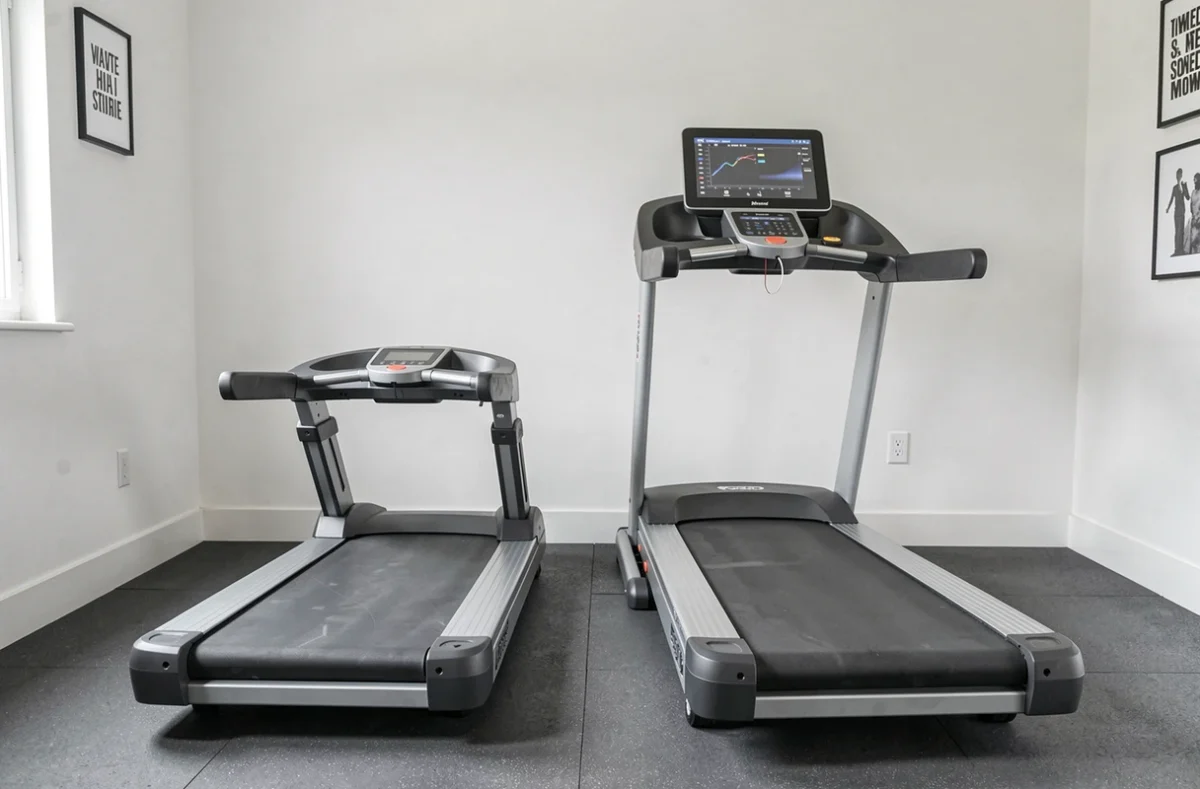
The motorized incline is not just for simulating a hill. Increasing the incline by a few degrees changes muscle engagement much more than increasing the speed by one or two kilometers per hour. The hamstrings, calves, and glutes take on a greater load, allowing for varied stimuli without increasing joint stress related to speed.
The programs integrated into the console have real utility as long as they offer interval profiles with automatic management of incline and speed. A program that only varies speed does not provide much compared to manual adjustment.
A device without motorized incline significantly limits progress. We consider this feature non-negotiable for structured home training, even at an intermediate level.
The choice of a treadmill is based on mechanical and normative criteria that product sheets do not prioritize. Usage class, actual impact noise, home safety, and motorized incline weigh more than motor power or the number of programs displayed on the console.