
For several years, the French motorway network has been undergoing profound changes. The deployment of free-flow tolls, without physical barriers, is redefining the boundary between toll and free sections. For those planning a road trip in France in 2026, the distinction between a free-access expressway and a motorway charged retroactively by license plate reading is no longer obvious.
Free-flow tolls: the invisible trap on French motorways

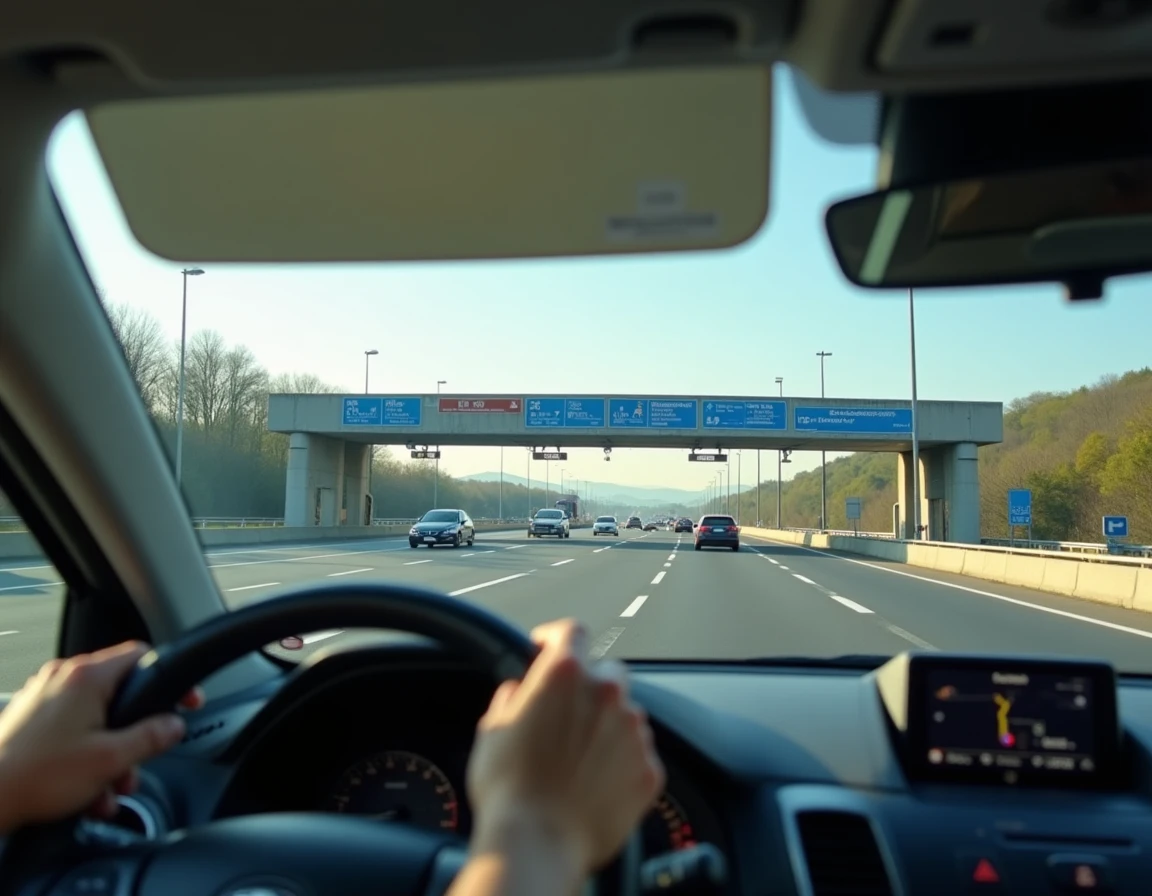
The classic barrier toll model is gradually disappearing. Since 2022, several major routes have been operating in free flow: the A4, A13, A14, and A79 adopted this system between 2024 and 2025. In practice, your license plate is automatically read and then billed retroactively.
The problem for travelers looking to drive for free is simple: these sections look like ordinary expressways. No booths, no slowdowns. Nothing visually indicates that you have just entered a toll section, except for a sign that is easy to miss.
Payment is then made online, at a terminal, or at a tobacco shop via the Nirio system, using your registration number. A missed payment triggers a surcharge.
For those planning a route on free motorways in France, it is now necessary to check each section individually. Traditional road maps have not yet integrated these changes. For everything about Pulsion Laval, the topic is addressed from a cartographic perspective with recent updates to the network.
A69 Toulouse-Castres and A40 Alpine: new toll motorways to anticipate
Two routes deserve special attention for a road trip in the south or in the mountains. The A69, connecting Toulouse to Castres, is set to transition to free flow by the end of 2026. This motorway, highly publicized for the environmental controversies surrounding its construction, will be toll-based without physical barriers.
Travel guides recommending avoiding the A61 or A62 to bypass tolls in the Southwest have not yet taken this new link into account. A road trip to Tarn or Aveyron requires recalculating routes.
In the Alps, the deployment of free flow is planned on the A40 between Passy and Annemasse, with implementation announced for 2027. Travelers using the Mont-Blanc road or heading to Chamonix from Geneva should note that this section, currently under classic toll, will change its operation. The bill will arrive after passing, with no possibility of inadvertently avoiding it.
Map of free motorways in France: which routes remain truly free
The free motorway network in France does exist, but it is concentrated on specific sections. Several major regions have non-conceded stretches, managed directly by the state.
- In the South, free sections are becoming rarer: it is necessary to favor national and departmental roads to avoid motorway concessions.
Everywhere, the free journey imposes compromises: longer travel times, crossing urban areas, two-way roads.
Travel time: what free travel really costs
Choosing a toll-free route lengthens the journey. Between Paris and Bordeaux, the difference can represent several hours. The calculation is not solely financial: fatigue, fuel consumption on winding roads, and more frequent stops weigh in the balance.
A road trip on free roads should be planned as a journey in itself, not just a simple detour. The stops must be thought out based on the available rest areas (fewer outside the motorway) and fuel supply points.
Planning an economical road trip in 2026: checks not to be overlooked
Before plotting a route on a free motorway map found online, some precautions are necessary.
- Check the date of the map update. The transition to free flow of new sections renders resources prior to 2025 obsolete.
- Verify the Crit’Air sticker of the vehicle. In 2026, all urban areas with more than 150,000 inhabitants require this sticker via Low Emission Zones. A detour through a city to avoid a toll can result in a fine if the vehicle does not meet the standards.
- Plan a realistic fuel budget. Driving off the motorway increases consumption on most vehicles, especially in hilly or mountainous areas.
The most common trap in 2026 is confusing “absence of barrier” with “free.” Free flow operates precisely on this confusion. A section without a visible physical toll is not a free section. Verification must be done section by section, cross-referencing data from concessionaires with recent navigation tools.
The savings made on tolls can also be absorbed by other costs. An older vehicle, excluded from Low Emission Zones, will require detours around city centers or renting a newer model. The total cost of a toll-free road trip often exceeds just the motorway expense. Thinking in terms of a global budget, incorporating fuel, wear and tear, and time, remains the only reliable method to determine if the free route is worth the detour.