
Keeping your tires in good condition is essential for the safety and performance of any vehicle, especially a Citroën C3. Driving with well-maintained tires not only extends their lifespan but also ensures better grip on the road.
For a Citroën C3, you should regularly check the tire pressure and ensure it matches the manufacturer’s recommendations. Regular balancing and alignment are also necessary to prevent premature wear. Don’t forget to monitor the tread depth to guarantee optimal traction, especially in wet conditions.
Tire Pressure Standards and Maintenance for the Citroën C3
For a Citroën C3, tire pressure varies depending on the engine type and the vehicle load. The manufacturer’s recommendations are crucial for optimizing tire safety and durability. The plate located on the driver’s door as well as the owner’s manual provide this important information.
- Engine 1.0: unladen pressure of 2.2 bar, loaded pressure of 2.3 bar at the front and 2.5 bar at the rear.
- Engine 1.1: unladen pressure of 2.0 bar.
- Engine 1.2: unladen pressure of 2.2 bar, loaded pressure of 2.5 bar.
- Engine 1.4: unladen pressure of 2.0 bar.
- Engine 1.4 16V/VTR: unladen pressure of 2.1 bar at the front, 2.3 bar at the rear, loaded pressure of 2.1 bar at the front, 2.8 bar at the rear.
- Engine 1.6: unladen pressure of 2.2 bar, loaded pressure of 2.3 bar at the front and 2.5 bar at the rear.
- Engine 1.6 HDI: unladen pressure of 2.6 bar.
The Citroën C3 can be equipped with different tire sizes, including 185 65 R15 88T and 196 55 R16 87T. Vigilance regarding C3 tire pressure is therefore essential to avoid premature wear and ensure good grip. Use a pressure gauge to regularly check the pressure, especially before long trips or in case of temperature fluctuations.
Regular tire maintenance also involves rotating them every 10,000 to 12,000 kilometers to balance wear. Periodic visits to a professional will help detect any misalignments or imbalances, thus ensuring increased longevity for your Citroën C3 tires.
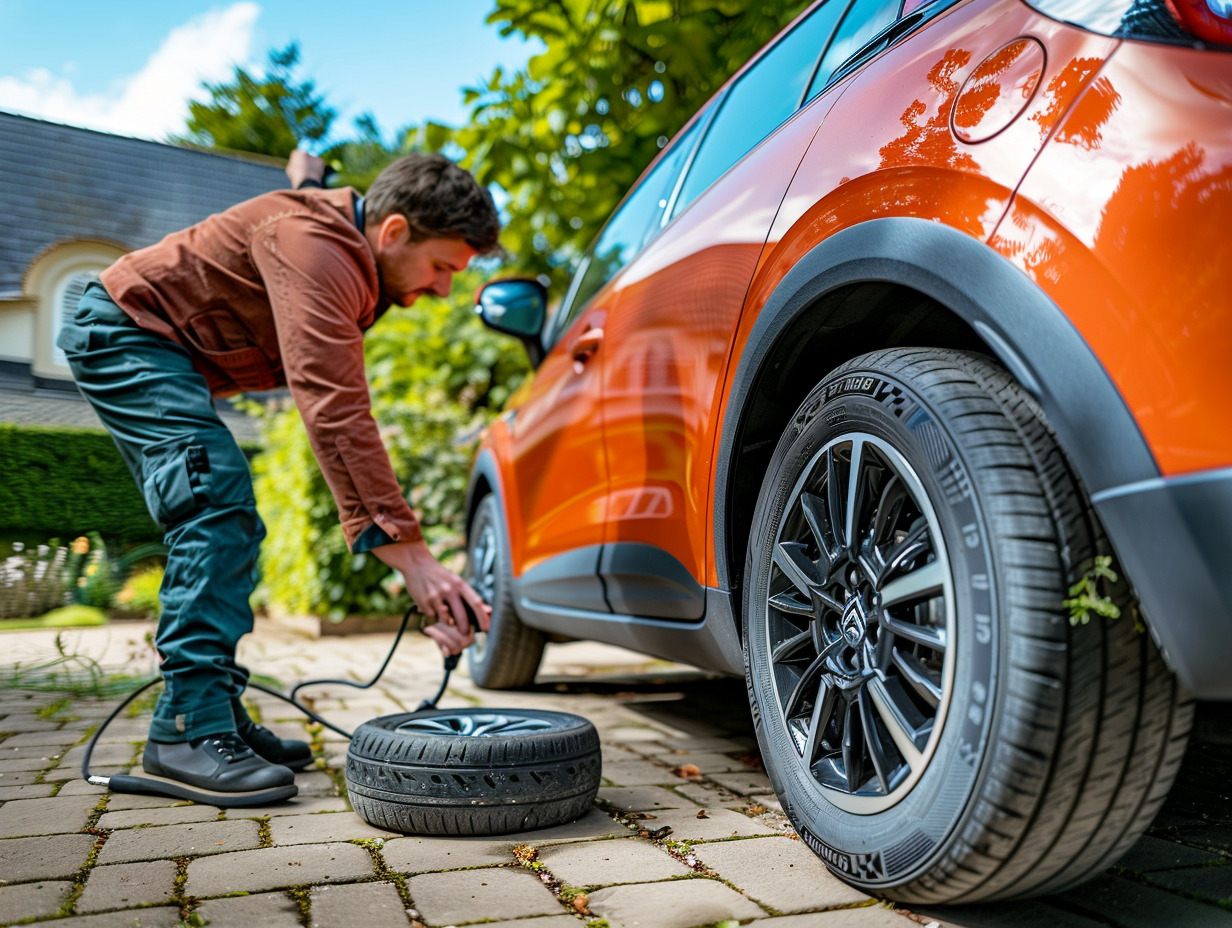
Practical Tips for Optimal Tire Longevity
Maintaining proper pressure is key to ensuring the safety, fuel efficiency, and durability of your tires. For the Citroën C3, follow the manufacturer’s recommendations found on the driver’s door and in the owner’s manual. Correct pressure improves grip and reduces fuel consumption.
- Check tire pressure at least once a month and before each long trip.
- Use a reliable gauge for accurate measurements.
- Adjust pressure according to the vehicle load.
To avoid premature wear, rotate the tires every 10,000 to 12,000 kilometers. This practice helps balance wear and optimize tire longevity. The Citroën C3, with its various engines, requires special attention to specific pressures.
TPMS Technology: A Valuable Ally
For continuous monitoring, the Tire Pressure Monitoring System (TPMS) is integrated into the Citroën C3. This device alerts the driver in case of insufficient pressure, thereby ensuring increased safety and better pressure management.
Periodic visits to a mechanic help detect misalignments or imbalances, contributing to tire longevity. Following these practical tips ensures not only safe driving but also long-term savings.