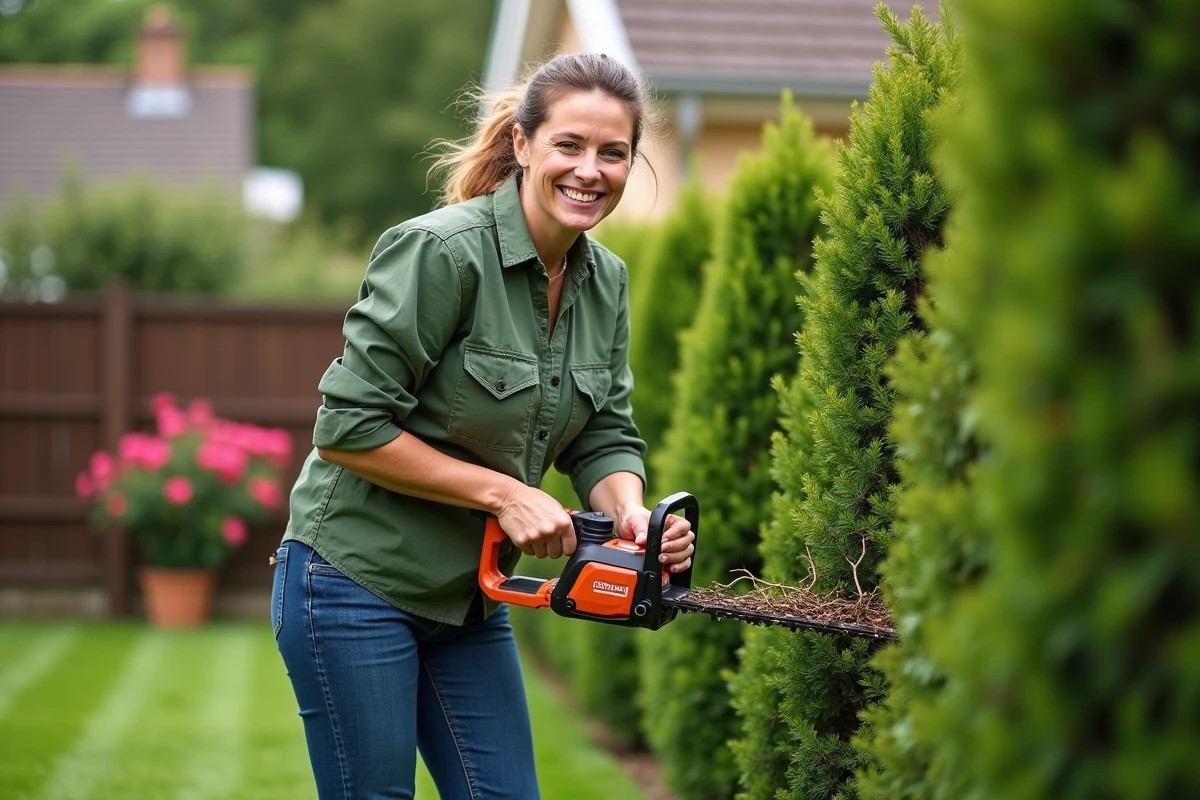
A compact electric hedge trimmer does not necessarily mean a loss of power. Some lightweight models can easily compete with much bulkier devices. It all depends on the right choice for the configuration of the shrubs and the maintenance rhythm. Differences in performance or comfort, often attributed to the blade length or battery life, can be explained by technical details that are rarely highlighted.
Safety features, noise levels, and ease of maintenance vary widely from one model to another, and the price tag is not always a reliable indicator. However, just a few specific criteria are enough to distinguish a reliable tool from a mere accessory brought out for special occasions.
Understanding the different types of electric hedge trimmers and their uses
It all starts with the use and nature of the hedge. In the market, two main families of electric hedge trimmers dominate: corded models and battery-operated ones. The corded model, plugged directly into the mains, offers lightness and unlimited autonomy. It is perfectly suited for hedges close to the house, in small gardens, or for frequent maintenance. It also excels for rose bushes or a newly planted hedge, where maneuverability is key.
If the hedge extends to the back of the property or winds far from outlets, the battery-operated hedge trimmer quickly finds its place. Its lithium-ion battery frees you from cord constraints, even if the working time remains shorter. It is formidable for occasional interventions on thuja, laurel, or thin branches, and its quiet operation makes a difference. Simplified maintenance adds to the appeal of cordless models.
Some tools stand out due to their specific purpose. The pole hedge trimmer, also known as telescopic, allows you to reach the tops without climbing a ladder. For old or very dense hedges, the power of a gas model remains the reference, especially for intensive or professional use. This diversity meets the variety of needs and hedge shapes.
For a detailed overview, https://www.taille-haie-electrique.com offers a rich comparison and concrete user feedback. You will discover the strengths and weaknesses of each tool, which helps to arbitrate between power, practicality, and adaptation to your gardening projects.
What criteria should you prioritize to choose the right model for your garden?
Every garden has its requirements. Finding the right electric hedge trimmer involves carefully observing the configuration of your hedges, their density, and the type of branches to tame. The area to be worked on, the frequency of maintenance, or the robustness of the foliage: all these parameters guide the choice.
Here are the most decisive criteria to examine when selecting a suitable device:
- Power: the thickness and vigor of the hedge dictate the motor power. For old or thick branches, it’s better to aim for over 500 W. Medium power models are suitable for young shrubs or more flexible hedges.
The blade length also plays a key role:
- Blade length: beyond 50 cm, the blade speeds up trimming on wide hedges, but the tool becomes heavier. For narrower subjects, a 40 cm blade offers the desired maneuverability.
The spacing of the teeth determines the ability to cut branches of varying thickness:
- Tooth spacing: for regular maintenance, 16 to 20 mm is sufficient. For sturdier hedges, 25 mm and above are required.
Ergonomics makes all the difference over time. A rotating handle, anti-vibration features, and a reasonable weight make usage pleasant, even during long sessions. For regular trimming, it’s best to stick to a device weighing less than 4 kg. Some models also come with a protective sheath or a deflector to limit debris projection.
The price and warranty duration also come into play, but nothing beats user reviews to gauge real reliability. Finally, for gardens without a nearby outlet, a quality lithium-ion battery quickly becomes essential.
Comparison and practical tips for a successful purchase
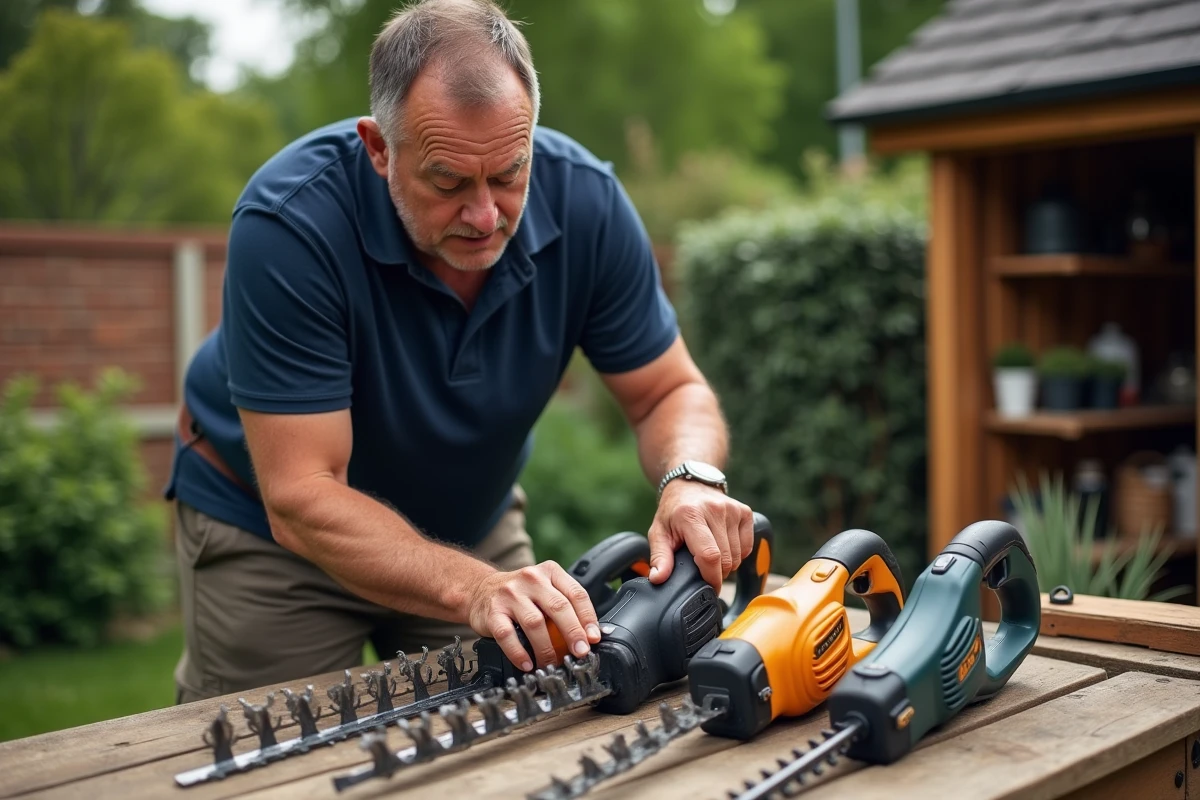
On the ground, two categories dominate: corded or battery-operated. Corded models shine in small spaces for regular and uninterrupted trimming. The power remains constant without worrying about recharging. Battery versions, on the other hand, free themselves from the cord. Their lightness and maneuverability are appealing when it comes to distant or irregularly shaped hedges. Before making a decision, simply check the capacity of the lithium-ion battery, which determines the duration of operation.
But motorization alone is not enough to make a difference. It’s also important to compare the blade length, tooth spacing, noise produced, or the presence of an anti-vibration system. A well-balanced tool reduces fatigue and allows for clean cuts, even on medium-sized branches. Many experienced users also praise the benefits of a rotating handle or an integrated deflector.
Safety remains non-negotiable. Goggles, gloves, and appropriate footwear are essential. You should also pay attention to the trimming calendar: the French Office for Biodiversity recommends suspending cutting from March 15 to July 31, the nesting period for many birds. Finally, regular maintenance, cleaning, lubrication, and sharpening of the blades extend the tool’s lifespan. For finishing touches or details, nothing replaces the secateurs, perfect for young shoots or neat edges.
At the end of the handle, each hedge trimmer tells the story of a garden: between performance, comfort, and respect for biodiversity, the right tool sustainably supports the gardener’s hand.